

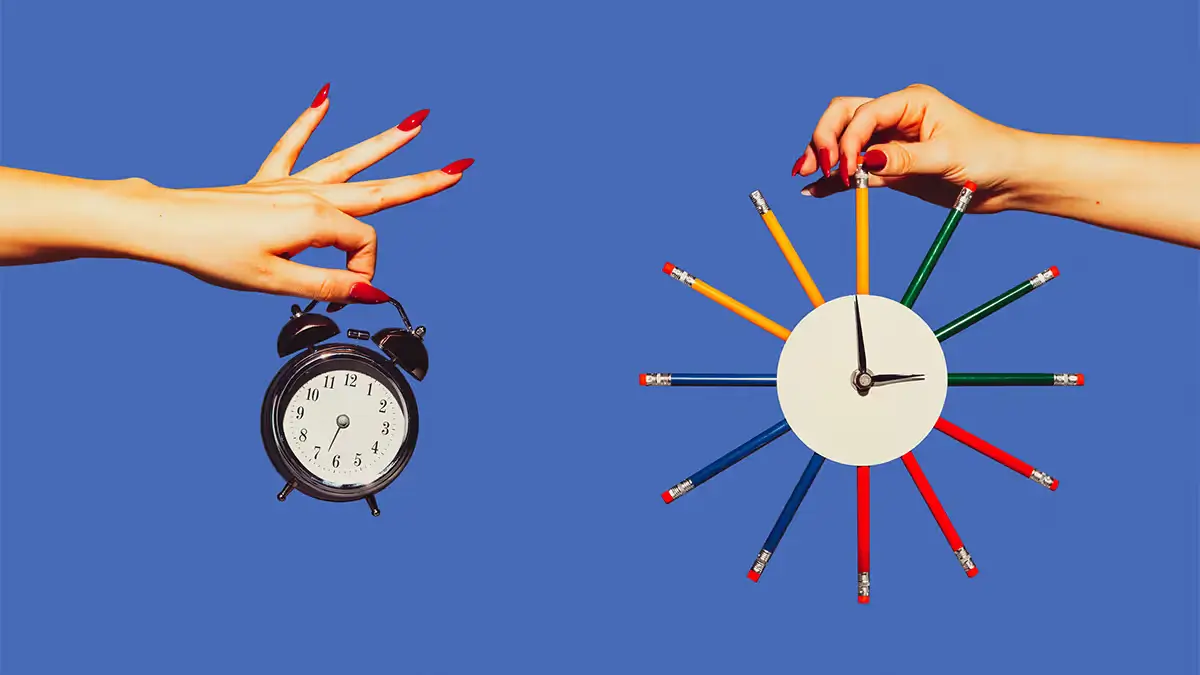
There is a familiar arc to trying a new productivity aid. The first week feels transformative. You start early, finish tasks you had been avoiding, and wonder why you did not do this sooner. By the third week the effect has faded into the background, the old patterns have crept back, and you are left with a mild dependence and the same to-do list. The aid did not stop working; you never built anything durable on top of it.
This article is about the missing step. Productivity aids, whether caffeine, a prescription eugeroic like modafinil, or a morning workout, are most valuable not as daily crutches but as tools for installing routines that eventually run on their own. Understanding how habits form makes it possible to use these aids deliberately, and then to need them less.
How Habits Actually Form
The popular picture of habit formation is a cue triggering a routine that produces a reward, repeated until the routine becomes automatic. That picture is broadly right, but two details matter for our purposes.
First, automaticity develops slowly and unevenly. Research on everyday habits suggests the median time to reach a stable, automatic behavior is around two months, with a wide range depending on the behavior’s complexity and how rewarding it is. Missing a single day has little effect; missing a week does more damage.
Second, the early repetitions are the hardest and the most important. In the first few weeks, the behavior draws heavily on effortful self-control because no automatic pathway exists yet. This is where most attempts fail, and it is exactly the phase where a well-chosen productivity aid can carry some of the load.
Where a Productivity Aid Fits in the Habit Loop
Think of a productivity aid as a temporary subsidy on the cost of the routine. Getting up at 6 a.m. to write is expensive in willpower when you are tired and the habit is new. Anything that lowers the felt cost of showing up, whether that is alertness from coffee, reduced initiation resistance from a focus enhancer, or simply feeling good after exercise, increases the odds that the repetition happens. Enough repetitions and the routine no longer needs the subsidy.
The mistake is treating the subsidy as the routine. If the habit you form is “drink coffee” rather than “write for an hour after coffee,” you have installed the aid and not the behavior. The distinction is subtle but decisive.
Attaching the aid to the behavior, not the other way around
A practical technique is to make the tool conditional on the behavior. The coffee gets made after the laptop is open and the document is loaded. The morning walk happens before, not instead of, the work session. This flips the cue-routine relationship so that the aid reinforces the routine rather than substituting for it.
Caffeine as a Habit-Building Tool
Caffeine is the tool most people already have, and its short duration (four to six hours) is an advantage in habit formation. It can be tied tightly to a specific block. Coffee at 7 a.m. with the first writing session creates a clean pairing that your brain learns quickly.
The downside is that caffeine’s own habit forms faster than the routine you are trying to build. Within a couple of weeks the morning cup mostly reverses overnight withdrawal rather than lifting you above baseline. That is not a disaster, but it means the subsidy shrinks over time, so the behavior needs to be gaining its own momentum by then.
Modafinil and the Longer Runway
Modafinil is a wakefulness-promoting agent approved for narcolepsy, obstructive sleep apnea-related sleepiness, and shift work disorder, prescribed at 100 to 200 mg in the morning, with a half-life of about 12 to 15 hours. It raises dopamine availability by inhibiting the dopamine transporter, with downstream orexin and histamine effects, and it carries a low abuse potential compared with amphetamine stimulants. It is a Schedule IV substance in the US.
For habit formation, two of its properties are relevant. The long duration means the subsidy covers the whole day, which helps when the routine you are building is an afternoon or evening one that caffeine cannot reach without wrecking sleep. And the commonly reported reduction in initiation resistance, the feeling that starting a hard task is less aversive, is precisely the cost that new habits impose most heavily.
Research on modafinil in healthy adults suggests benefits on planning and sustained attention rather than on simple tasks, which fits routines built around effortful work: writing, studying, structured practice. It does not appear to improve creativity, and some users describe a narrowing of focus, so it is less suited to habits that require open exploration.
The obvious constraints apply. Modafinil is prescription-only in most countries, and it belongs in a conversation with a physician, not in a self-experiment. It also should not become a substitute for sleep, since sleep is itself one of the strongest predictors of whether a new habit sticks.
Exercise: The Aid That Becomes Its Own Habit
Exercise is the one tool that is simultaneously a subsidy and a target behavior. A 20 to 30 minute morning session produces one to two hours of sharper executive function, which makes the next routine (the work block) cheaper. At the same time, exercise itself becomes automatic with repetition, and its chronic effects, better sleep, better mood, higher baseline attention, lower the cost of every other habit you are trying to build.
If you can only afford to establish one routine at a time, there is a strong case for making it this one first, because it makes each subsequent routine easier.
Comparing Aids by Habit-Formation Fit
| Aid | Duration | Best paired with | Risk to the habit | Fades as the habit strengthens? |
|---|---|---|---|---|
| Caffeine | 4 to 6 hours | Morning single-task blocks | Aid habit forms faster than target habit | Yes, naturally |
| Modafinil (prescribed) | 12 to 15 hours | Effortful all-day or afternoon routines | Becoming a daily requirement rather than a scaffold | Requires deliberate tapering |
| Armodafinil (prescribed) | About 15 hours | Later-day routines, shift-like schedules | Same as modafinil | Requires deliberate tapering |
| Exercise | 1 to 2 hours acute, ongoing chronic | Everything | Skipping when busy | No, it compounds |
| Environment design | Continuous | Everything | None | No |
Armodafinil, the R-enantiomer of modafinil dosed at 150 to 250 mg, behaves similarly to the parent compound and is included for completeness. Environment design (keeping the cue visible, removing friction, removing competing cues) is not a substance but is arguably the most reliable entry on the list, because it works whether or not you feel motivated.
The Taper: Turning a Scaffold Into a Structure
The endpoint of using any of these tools for habit formation is needing it less. That requires a deliberate taper, which few people plan.
A workable pattern runs roughly like this. For the first three to four weeks, use the aid consistently and tie it tightly to the routine. Once the routine feels noticeably less effortful, begin removing the aid on the easiest days: a weekend, a low-stakes Tuesday. Track whether the routine survives. If it does, expand the aid-free days. If it collapses, you tapered too early, and the answer is to reinstate and wait another two weeks rather than to abandon the routine.
For caffeine this taper happens almost by itself as tolerance rises. For a prescribed eugeroic it needs to be discussed with the prescriber and done intentionally, both because the drug is meant for specific conditions and because a habit that only exists on dosing days is not really a habit.
Signs the Aid Has Become the Habit
Watch for these warning signs:
- You skip the routine entirely on days when you do not take the aid.
- Your first thought about the routine is about the aid, not the task.
- The dose has crept up to recover the original feeling.
- You use the aid for things other than the routine it was meant to support.
- Sleep has shortened to make room for the aided hours.
Any one of these is a signal to pause, re-examine what you have actually built, and return to tying the aid to the behavior.
Frequently Asked Questions
Can a productivity aid help me build a habit faster? It can lower the effort cost of the early repetitions, which is where most habits fail. It does not shorten the neurological timeline much; automaticity still takes weeks. What it changes is your odds of surviving those weeks.
Is it a problem to use caffeine every day while building a routine? Not usually. The main issue is that caffeine’s own habit outpaces the target habit, so plan for the subsidy to shrink and make sure the routine is gaining momentum on its own by the third week.
Should I use modafinil to establish a morning writing routine? Only with a prescription and a clear plan to taper. Its long duration and initiation-lowering effect fit effortful routines well, but a habit that only exists on dosing days has not been built. Pair it with environment design and treat it as scaffolding.
What is the single most reliable tool for building habits? Environment design: making the cue obvious, the action easy, and competing cues absent. It works when you are tired, unmotivated, or off your usual schedule, which is when substances tend to fail you.
How do I know when the habit has become automatic? When you find yourself doing it without deciding to, and when missing it feels wrong rather than like a relief. At that point the aid has done its job, and you can let it go.
Final Thoughts
A productivity aid is best understood as a temporary loan against the effort a new routine demands. Used well, it carries you through the fragile early weeks until the behavior stands on its own; used poorly, it becomes the thing you built instead of the thing you meant to build. Caffeine fades on its own, exercise compounds, and a prescribed eugeroic like modafinil needs a deliberate taper and a doctor’s involvement. Whatever you use, tie it to the behavior, watch for the signs of substitution, and plan from the start to need it less. The routine that lasts is the one that no longer requires the aid to show up.
For more topic guides and related resources, visit Modavance.
